How to administer INSTILLAGEL®

INSTILLAGEL® is available in easy-to-use, sterile, pre-filled, single-use syringes.

7 simple steps for catheterization1

Got questions about INSTILLAGEL®?

Visit the FAQs
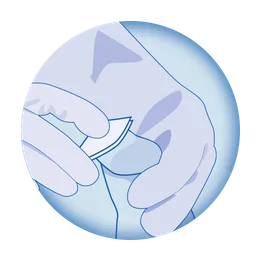
  1. Icon showing external cleaning of the male genital area

    Step 1

    • Clean the glans (in males) and external endourethral orifice
    • Take INSTILLAGEL® from its sterile package
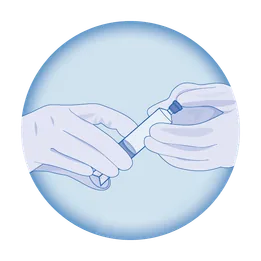
  2. Icon showing a gentle press on syringe plunger while the cap is on

    Step 2

    With the syringe cap still on, press the plunger gently to release the pressure point

  3. Icon showing removal of the cap

    Step 3

    Remove the syringe cap

    • No breakage of plastic is required to remove the cap
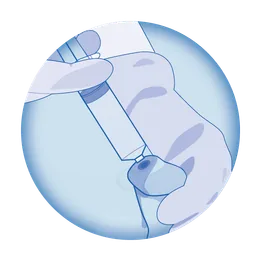
  4. Icon showing application of a small amount of gel around the male urethral opening

    Step 4

    Apply a small amount of gel around the endourethral opening (male)
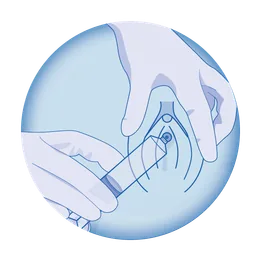
  5. Icon showing application of gel to the female urethra

    Step 5

    Adult females

    • Instil 6 mL of gel to fill the whole urethra
    • If desired, some gel may be deposited on the orifice and then spread with a cotton swab
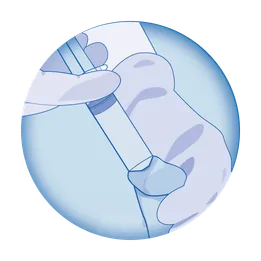
    Icon showing application of gel to the male urethra

    Adult males

    • While holding the penis upright, insert the tip in the urethra and instil the gel slowly
    • Keep the glans compressed until the anaesthetic and antiseptic action has set in (5–10 minutes)
    • Usual dose: 11 mL
      • An additional 6 or 11 mL may be necessary

    Children (2 to 12 years)

    • < 12 years of age: Maximum lidocaine dose should not exceed 6 mg/kg or 3 mL/10 kg
    • > 12 years of age: Dosing should be adjusted according to the patient’s weight and physical condition
    • No more than 4 doses in a 24-hour period

    Other populations

    Debilitated, elderly, or acutely ill patients should receive reduced doses, adjusted to account for the patient’s weight and physical condition

  6. Icon showing instillation of gel within the male urethra

    Step 6

    Allow INSTILLAGEL® to fill and gently dilate the entire urethra

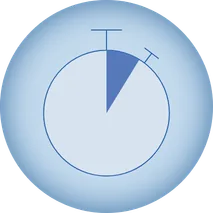
  7. Icon indicating a 5–10 minute waiting period

    Step 7

    Allow 5–10 minutes for the onset of anaesthetic and antiseptic action prior to performing endourethral procedures

Additional information1

  • If > 11 mL is indicated, repeat the procedure with a second INSTILLAGEL® syringe
  • When anaesthesia is especially important, e.g., during sounding or cystoscopy, a larger quantity of gel (e.g., 28 to 39 mL) may be instilled in 3 to 4 portions
    • In these cases, allow 10–12 minutes before insertion of the instrument
  • Maximum dose: No more than 4 doses should be given during a 24-hour period
  • Syringes are for single-use only. Any gel not used in a single application should be discarded
  • The syringe tip does not support needle attachment

Step-by-step administration instructions

Download a brochure

Explore INSTILLAGEL®’s unique syringe design and UROSAFETIP®

Learn more

In patients for whom INSTILLAGEL® is not suitable, JELIDO® is a chlorhexidine-free option for catheterization

Visit jelido.ca

INSTILLAGEL® (lidocaine and chlorhexidine gel) is indicated for surface anaesthesia, lubrication, and antisepsis for:1

  • The male and female urethra during cystoscopy
  • Catheterization
  • Exploration by sound and other endourethral operations

for additional safety information and for a link to the Prescribing Information, which discusses:

  • Contraindications in children < 2 years of age and in patients with a known or suspected hypersensitivity to this drug or any component of the formulation.
  • Most serious warnings and precautions regarding: use in urethra only (not for parenteral administration) and immediate systemic hypersensitivity reactions.
  • Other relevant warnings and precautions regarding: use of the lowest effective dose; avoiding contact with eyes and middle ear; familial malignant hyperthermia; carcinogenesis and mutagenesis; excessive hypotensive response; use during early pregnancy (first trimester); and dose reduction in children, debilitated patients, acutely ill patients, and patients with sepsis. Use with caution in patients with: severe shock; sepsis and/or traumatized mucosa at the application site; epilepsy; impaired cardiac conduction; bradycardia; impaired cardiovascular function; impaired hepatic or renal function; and in persons with known drug sensitivities.
  • Conditions of clinical use, adverse reactions, drug interactions, and dosing instructions.

JELIDO® (lidocaine hydrochloride jelly) is indicated for:2

  • Surface anaesthesia and lubrication for:
    • The male and female urethra during cystoscopy, catheterization, exploration by sound, and other endourethral operations;
    • Nasal and pharyngeal cavities in endoscopic procedures such as gastroscopy and bronchoscopy;
    • Proctoscopy and rectoscopy;
    • Tracheal intubation.
  • Symptomatic treatment of pain in connection with cystitis and urethritis.

Consult the Product Monograph for contraindications, warnings, precautions, adverse reactions, drug interactions, dosing, and conditions of clinical use. The Product Monograph is also available by calling 1-888-550-6060.

Consult the Dosage and Administration section of the Prescribing Information for full dosing instructions.

Reference: 1. INSTILLAGEL® Prescribing Information. PENDOPHARM®, Division of Pharmascience Inc. February 19, 2025. 2. JELIDO® Product Monograph. PENDOPHARM®, Division of Pharmascience Inc. February 19, 2026.

PENDOPHARM

INSTILLAGEL is a registered trademark of FARCO-PHARMA GmbH, used under license. JELIDO and UROSAFETIP are registered trademarks of Finchley Research & Development Inc., used under license. PENDOPHARM and its logo are registered trademarks of Finchley Research & Development Inc., used under license. *Registered trademarks are the property of their respective owners. © 2026 PENDOPHARM®. All rights reserved.
Publication date: 29-10-2026

Contact us

For any questions about our products or further information about our company, please do not hesitate to contact us.

INSTILLAGEL® and JELIDO® are available at select specialty pharmacies and by special order at most pharmacy outlets.

6111 Royalmount Avenue, Montreal (Quebec), H4P 2T4, CanadaTelephone+1 (514) 340-5045Fax+1 (866) 926-7654 or +1 (514) 733-9684

MED INFO

Toll-free Telephone: +1 (888) 550-6060
Fax: +1 (514) 340-0164
E-mail: [email protected]

PHARMACOVIGILANCE:

By Telephone: +1 (888) 550-6060
By Fax: +1 (866) 551-1939
By E-mail: [email protected]

For Medical and Scientific Information Services, Adverse Event Report, and Customer Service, please visit our website at https://pendopharm.com/contact/.

INSTILLAGEL® important safety information

Indications and clinical use:

INSTILLAGEL® (lidocaine and chlorhexidine gel) is indicated for surface anaesthesia, lubrication, and antisepsis for:

  • The male and female urethra during cystoscopy
  • Catheterization
  • Exploration by sound and other endourethral operations

Contraindications:

  • INSTILLAGEL® must not be used in children under the age of 2
  • Known or suspected hypersensitivity to local anaesthetics of the amide type, to chlorhexidine or to any ingredient in the formulation (e.g., methylparaben, propylparaben etc.)

Most serious warnings and precautions:

INSTILLAGEL® is for urethral use only: Do not use parenterally.

IMMEDIATE SYSTEMIC HYPERSENSITIVITY REACTIONS INCLUDING HYPOTENSION, TACHYCARDIA, SHORTNESS OF BREATH, SKIN ERYTHEMA, AND ANAPHYLAXIS: IN INDIVIDUALS WHO RECEIVED CHLORHEXIDINE GLUCONATE PREPARATIONS APPLIED TOPICALLY TO THE SKIN OR GIVEN INTRAURETHRALLY, INTRANASALLY, OR ON CENTRAL VENOUS CATHETERS IMPREGNATED WITH THE DRUG. DISCONTINUE TREATMENT IMMEDIATELY IF ADVERSE REACTIONS OR HYPERSENSITIVITY OCCUR.

Other relevant warnings and precautions:

  • The lowest dosage that results in effective anaesthesia should be used to avoid high plasma levels and serious adverse effects
  • Avoid contact with eyes and middle ear
  • Potential triggering agent for familial malignant hyperthermia
  • Carcinogenesis and mutagenesis
  • Lidocaine should be used with caution in patients in severe shock
  • Caution in:
    • Patients with sepsis and/or traumatized mucosa at the area of application
    • Patients with epilepsy, impaired cardiac conduction, bradycardia, impaired hepatic or renal function
    • Patients with impaired cardiovascular function
    • Persons with known drug sensitivities
  • Excessive hypotensive response may occur in the presence of severe damage to the urethra
  • Not recommended for use in the first 3 months of pregnancy
  • Reduced doses in children, debilitated patients, acutely ill patients, and patients with sepsis

For more information:

Consult the Prescribing Information for important information relating to adverse events, drug interactions, and dosing information that has not been discussed in this piece. The Prescribing Information is also available by calling 1-888-550-6060.